
Engineering Century-Long Resilience: How Punjab is Redefining Subsurface Infrastructure Lifecycle Mechanics
Subsurface utility networks are the unglamorous, foundational backbone of urban economic engines, yet they remain systematically vulnerable to rapid structural decay. Across Pakistan’s urban centers, the standard lifecycle of a municipal sewer pipe rarely exceeds 25 years. The culprit is not merely structural load, but highly aggressive microenvironments: biogenic sulfuric acid corrosion rapidly strips away traditional reinforced concrete, triggering premature structural collapses, localized urban flooding, and catastrophic groundwater contamination.
To break this expensive, disruptive cycle of reactive repairs, the Government of Punjab, under the Punjab Cities Inclusive Program (PCIP) and in strategic partnership with the World Bank Group, executed a fundamental paradigm shift in municipal asset management. By introducing High-Density Polyethylene (HDPE) lining technology to traditional reinforced concrete pipes, the province is building urban infrastructure with a verified design life of 100 years—effectively quadrupling the asset lifecycle and transforming municipal public finance frameworks.
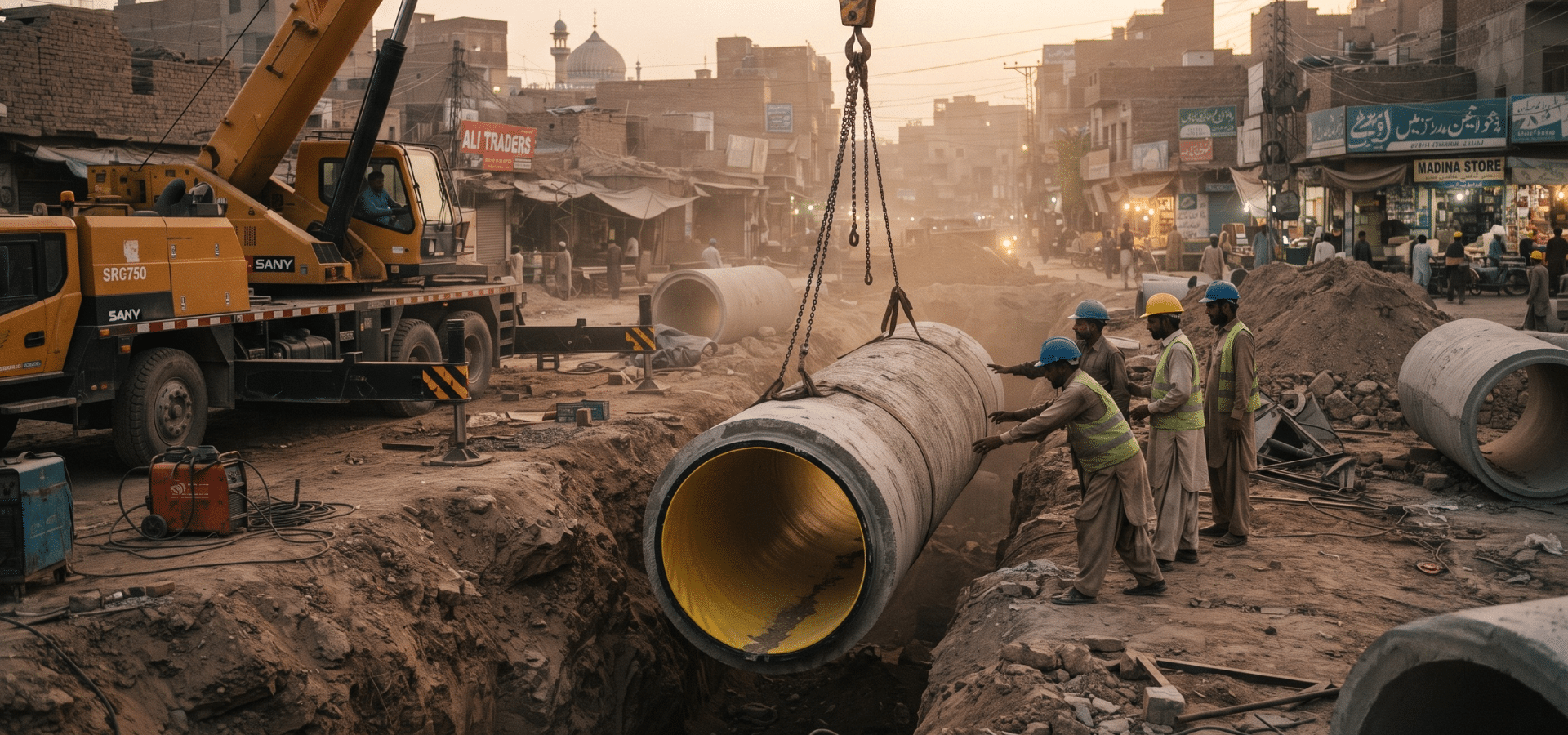
Traditional concrete sewer systems suffer from accelerated microbial induced corrosion (MIC). Sewers generate hydrogen sulfide ($H_2S$) gas, which anaerobic bacteria on the pipe walls convert into sulfuric acid ($H_2SO_4$). This acid aggressively attacks the calcium silicate hydrate matrix of concrete, leading to structural thinning and eventual collapse.
The introduction of an HDPE lining alters this thermodynamic and chemical vulnerability. The plastic liner acts as an impermeable chemical shield. High-Density Polyethylene possesses exceptional chemical resistance to both highly acidic and highly alkaline environments ($pH\ 1$ to $pH\ 14$), eliminating direct acid-to-concrete contact.
Beyond corrosion prevention, the hydraulic performance of the network is substantially optimized. HDPE lining creates a smooth internal surface, significantly lowering the Hazen-Williams friction coefficient compared to raw, weathered concrete. This reduction in surface roughness minimizes sediment deposition, drastically curtails localized hydraulic friction losses, and effectively mitigates structural infiltration and exfiltration loops. The result is a highly reliable closed loop that keeps untreated wastewater contained, protecting surrounding shallow aquifers from contamination.
Deploying advanced infrastructure tech within a developing market requires bridging the gap between theoretical global design standards and localized operational execution. To validate the viability of the project, senior Punjab government officials and municipal engineers conducted an extensive technical evaluation at the Singapore Water Centre, studying the operational parameters of high-performance closed-loop sewerage configurations under extreme tropical load.
Translating these global insights into sustainable local delivery required strong institutional ownership. Rather than relying on volatile, long-lead international procurement, the Government of Punjab spearheaded the localization of the entire industrial supply chain. Collaborating with technology partners in China, the government oversaw the direct import of specialized automated manufacturing equipment, establishing Pakistan’s very first domestic production facility for advanced HDPE-lined concrete pipes.
This rapid technology transfer completely altered procurement dynamics, moving the sector from a reliance on expensive foreign imports to a sustainable domestic industrial supply model.
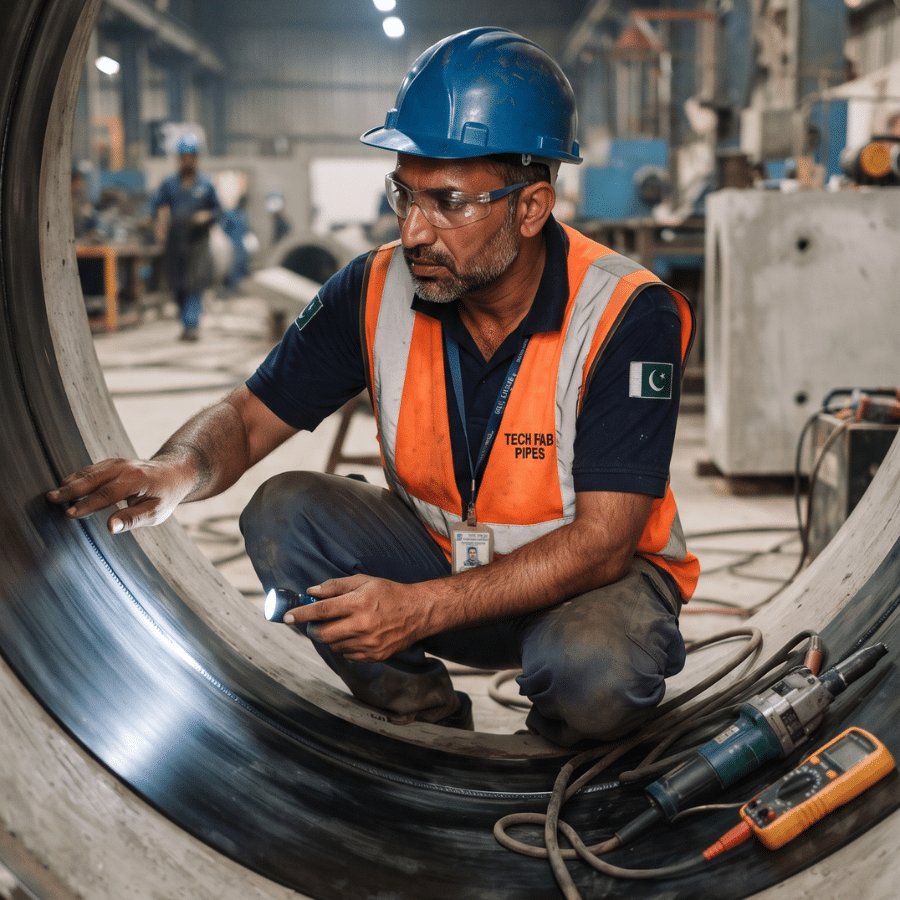
The long-term fiscal implications of transitioning from a 25-year to a 100-year infrastructure design model are profoundly transformative for municipal public finance architectures.
Capital Expenditure (CapEx) Reductions: Extending asset longevity by 300% reduces long-term capital replacement outlays by approximately 75% over the full lifecycle of the municipal network, freeing up immense fiscal space for other critical urban developments.
Mitigating Supply Vulnerability: Localizing production removes foreign exchange exposure, bypassing macroeconomic import bottlenecks and substantially lowering delivery lead times for critical infrastructure components.
Socio-Economic Value Creation: Establishing a new domestic industrial subsector generates technical manufacturing jobs while building deep local capacities in advanced materials engineering.
From a public risk and environmental safety standpoint, the benefits are equally clear. Mitigating systemic pipe failures reduces the incidence of urban street collapses and sewer overflows, directly lowering public health risks associated with waterborne pathogen exposure. By building infrastructure that lasts a century, Punjab is moving past short-sighted, reactive maintenance cycles and setting a new national benchmark for sustainable, resilient urban planning.
*******Images are created by AI